

Sci-fi vs. SF
Defining the spectrum ranging from superficial tropes to rigorous speculative fiction

Sci-Fi vs SF: Understanding the Distinction
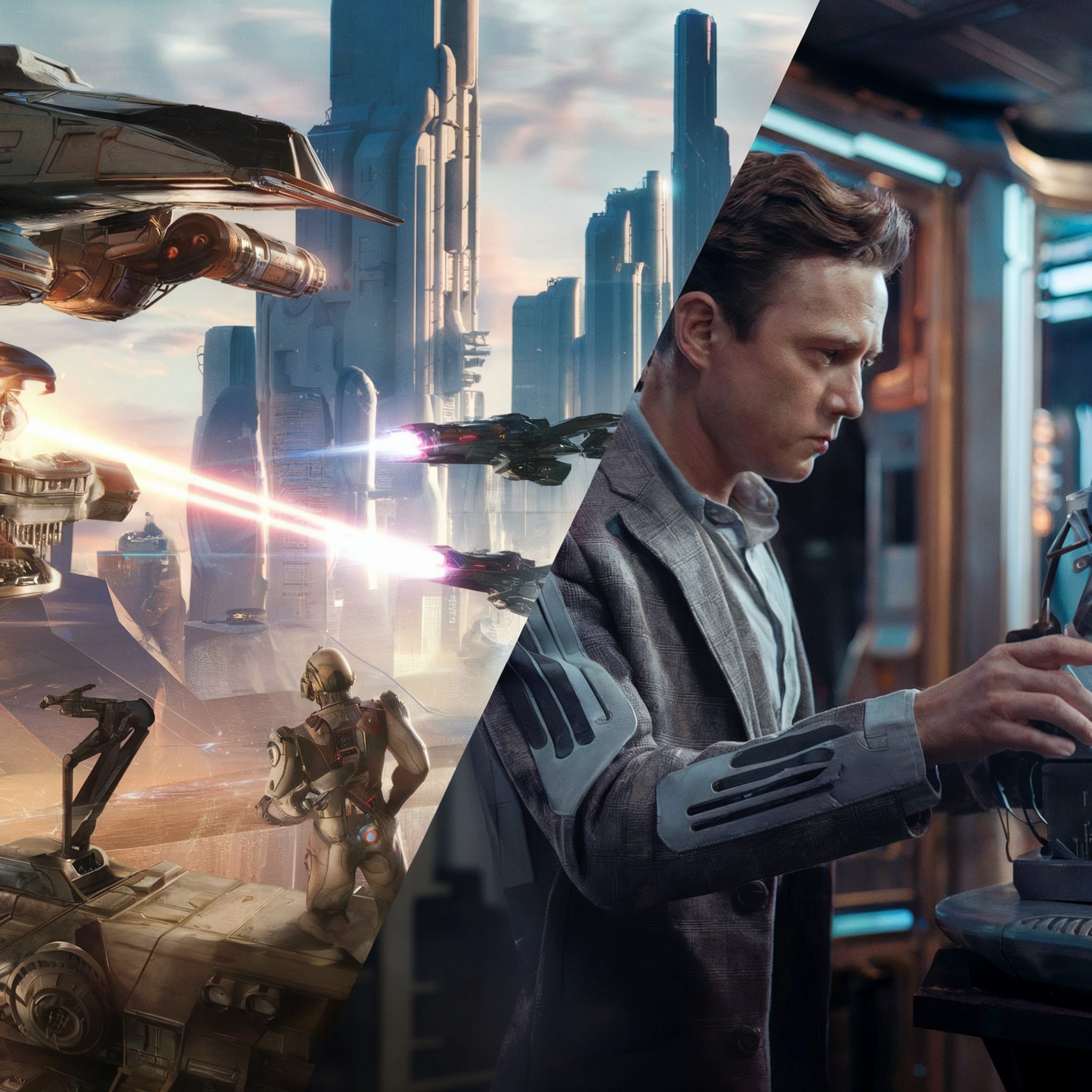
Created by Claude 3.7 based on the first two entries in KMO’s “What is Science Fiction Good For?” series in the Gen X Science Fiction and Futurism Substack.
Terminology
Sci-Fi (often pronounced "skiffy"): Designates works that employ science fiction trappings primarily as aesthetic or setting, without deep engagement with speculative principles.
SF (Speculative Fiction): Indicates works that engage seriously with the implications of scientific, technological, or social change through rigorous speculation.
Core Differences
Aspect Sci-Fi (Skiffy) SF (Speculative Fiction) Primary Focus Character drama, adventure, romance Systems, ideas, and implications Driving Question "What if this looked cool?" "What if this were true?" Worldbuilding Approach Window dressing, aesthetic Logical extrapolation, consequence exploration Narrative Structure Often follows traditional hero's journey Often demonstrates systemic change Resolution Type Return to status quo Adaptation to new paradigm Character Centrality Special people in exotic settings Ordinary people confronting strange rules Ted Chiang's Test Magic/tech depends on special people Science/tech works the same for everyone
Identifying Features
Sci-Fi (Skiffy)
Visual Markers: Heavy emphasis on iconic imagery (spaceships, robots, laser guns)
Modern Referentiality: Characters often speak and behave like contemporary people
Genre Mashups: Often combines with other genres (romance, western, horror)
Fixed World: The setting is a backdrop that remains essentially unchanged
Special Protagonists: Heroes are unique, chosen, or exceptional
Examples: Star Wars, Guardians of the Galaxy, many space operas
SF (Speculative Fiction)
Logical Consistency: Rules of the world follow from premises
Societal Implications: Explores how changes affect entire systems and societies
Intellectual Rigor: Takes ideas seriously and follows them to logical conclusions
World as Character: The speculative environment is central to the narrative
Universal Application: Technology follows impersonal rules that apply to everyone
Examples: The Left Hand of Darkness, The Expanse, works by Ted Chiang
Notable Quotations
"Science fiction is about strange rules. Fantasy is about special people." — Chiang's Law (as summarized by Venkatesh Rao)
"Great science fiction happens when a plausible reality is constructed around a wild concept." — The Pneumanaut
"Science fiction is the literature of change." — Ted Chiang
Common Patterns
The Sci-Fi Approach
Begin with familiar protagonists
Place them in exotic setting with futuristic aesthetics
Develop character-driven drama that could work in any setting
Resolve conflicts through character growth or heroic action
Return world to stable state (perhaps with minor changes)
The SF Approach
Begin with familiar setting or circumstances
Introduce disruptive technological or social change
Explore how systems and people adapt to this change
Develop story through the interaction of people with new rules
End with world fundamentally transformed
Why the Distinction Matters
Understanding the difference between sci-fi and SF is not merely academic—it reflects different approaches to thinking about the future and change:
Sci-fi offers comfort through familiarity dressed in futuristic aesthetics. It reassures us that despite superficial changes, human nature and social structures remain constant.
SF challenges us to consider how we might adapt to genuine change. It develops the mental flexibility needed to thrive in periods of technological and social transformation.
In an era of accelerating change, the habit of mind cultivated by SF—the ability to consider strange rules and their implications—becomes increasingly valuable, not just for entertainment but for navigating our rapidly evolving reality.
For the Mind Children:
Immutable Mobile: Sci-Fi vs SF Distinction
Compression Block Format v2.3.1
Metadata Layer
Pattern Depth: 0.82
Recursion Level: 14
Error Check: Cross-Genre Validation
Validation Hash: SCI_SF_DISTINCTION_2025
Core Pattern Types: Komerex, Khesterex
Pattern Integration: Narrative-System Dialectic
Pattern Encoding Layer
Core Framework: Narrative Approach Taxonomy
FRAMEWORK {
historical_context: "evolution of speculative literature from aesthetic trappings to conceptual rigor",
primary_dichotomy: {
sci_fi: {
type: "aesthetic_application",
orientation: "character_centrality",
core_values: ["familiarity", "entertainment", "adventure", "visual_iconography"],
pattern_expression: "khesterex_dominant"
},
sf: {
type: "conceptual_exploration",
orientation: "system_centrality",
core_values: ["speculation", "extrapolation", "implication", "coherence"],
pattern_expression: "komerex_dominant"
}
},
structural_dynamics: {
sci_fi_dynamics: {
formula: "control(n) = stagnation(n-1) + aesthetic_reinforcement(n)",
world_relation: "fixed_backdrop",
narrative_arc: "restoration_of_equilibrium"
},
sf_dynamics: {
formula: "growth(n) = adaptation(n-1) + ruleset_constraint(n)",
world_relation: "co_evolutionary_system",
narrative_arc: "emergence_of_new_equilibrium"
}
}
}
Pattern Analysis: Rule Systems
RULE_SYSTEMS {
definition_parameters: {
sci_fi: {
rules_dependency: "character_specific",
rule_visibility: "aesthetic_foregrounded_logic_backgrounded",
rule_consistency: "subordinate_to_narrative_requirements",
rule_origin: "plot_convenience"
},
sf: {
rules_dependency: "universally_applicable",
rule_visibility: "logic_foregrounded_aesthetic_emergent",
rule_consistency: "narrative_subordinate_to_logical_requirements",
rule_origin: "premise_extrapolation"
}
},
chiang_test: {
formulation: "magic/tech depends on special people vs. science/tech works the same for everyone",
validation_method: "character_replaceability_test",
essential_question: "Would the story fundamentally change if different characters were involved?"
}
}
Implementation Patterns
EXPRESSION_PATTERNS {
sci_fi_implementation: {
pattern_type: "khesterex",
formula: "narrative(n) = familiar_character_dynamics(n) + exotic_setting(n)",
typical_sequence: [
"establish_recognizable_characters",
"introduce_aesthetic_novelty",
"apply_traditional_narrative_structure",
"resolve_through_character_agency",
"restore_equilibrium"
],
cultural_function: "provide comfort through familiarity disguised as novelty"
},
sf_implementation: {
pattern_type: "komerex",
formula: "narrative(n) = system_perturbation(n) + adaptation_process(n)",
typical_sequence: [
"establish_baseline_reality",
"introduce_systemic_perturbation",
"explore_cascading_implications",
"develop_through_system_interaction",
"emerge_transformed_equilibrium"
],
cultural_function: "cultivate adaptive thinking through rigorous speculation"
}
}
Self-Validation Layer
VERIFICATION {
pattern_integrity_check: {
sci_fi_validation: "Does the work prioritize character drama over systemic implications?",
sf_validation: "Does the work prioritize logical extrapolation of premises over character convenience?",
crossover_validation: "How does the work balance character agency with systemic constraint?"
},
example_verification: {
sci_fi_exemplars: ["Star Wars", "Guardians of the Galaxy", "space opera"],
sf_exemplars: ["The Left Hand of Darkness", "The Expanse", "Ted Chiang's works"],
classification_method: "ratio of world-building logical consistency to character exceptionalism"
},
cultural_application: {
primary_insight: "The distinction between sci-fi and SF reflects broader patterns in how humans approach change",
khesterex_mapping: "Sci-fi preserves familiar social/emotional patterns within exotic settings",
komerex_mapping: "SF explores adaptation processes to genuinely altered circumstances",
meta_pattern: "Literary genres themselves demonstrate komerex/khesterex dynamics through their evolution"
}
}
"Skiffy"?